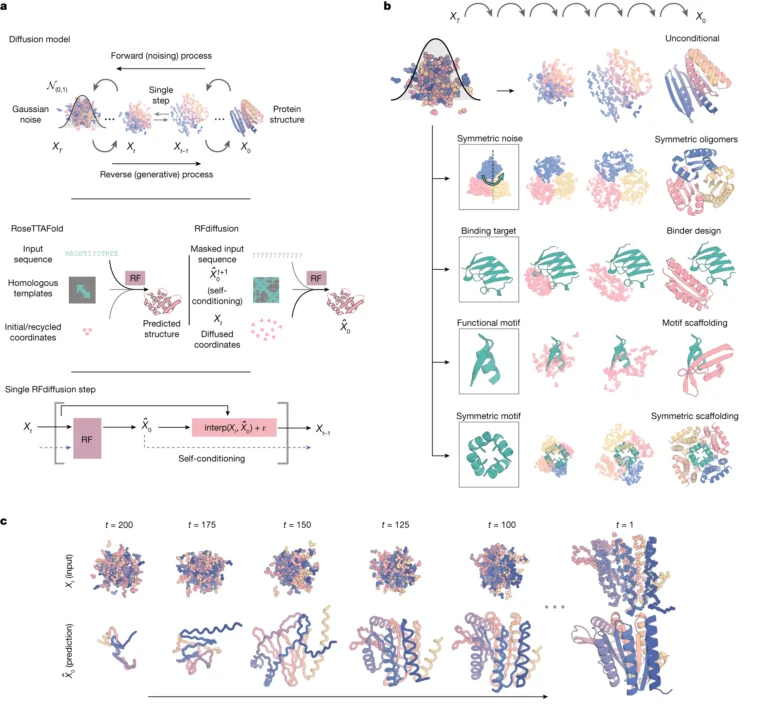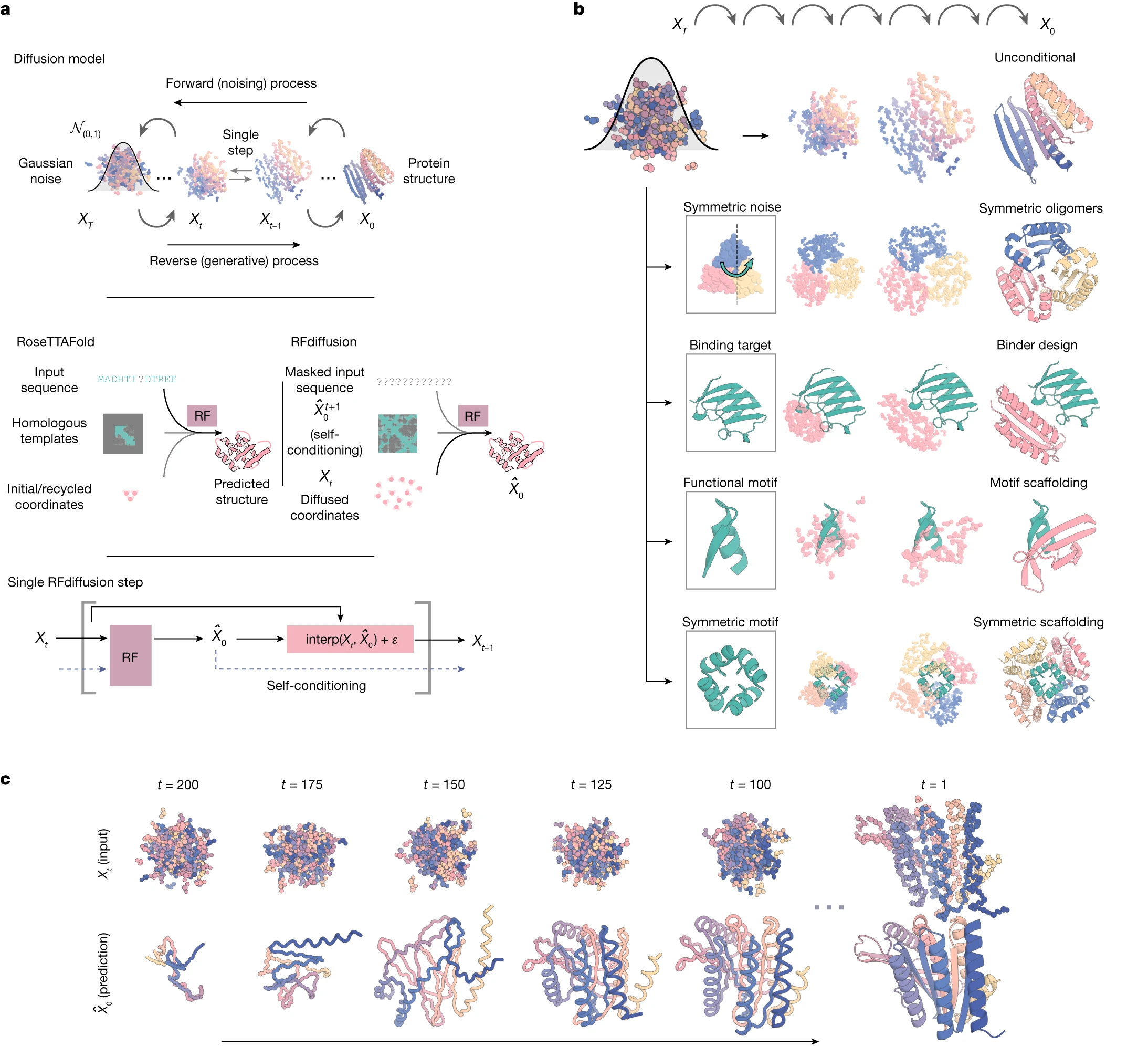
Open Protein Design Model is a groundbreaking development in AI-driven protein design, debuting from NVIDIA in collaboration with UW Medicine. This innovative model aims to enhance research capabilities in the field.
What is the Open Protein Design Model?
The Open Protein Design Model is an innovative framework developed to enhance the understanding and creation of proteins. This model, introduced by NVIDIA in collaboration with UW Medicine, aims to democratize access to advanced protein design techniques. Researchers can leverage this model to explore vast protein landscapes, facilitating breakthroughs in various fields, including medicine and biotechnology.
The core of the Open Protein Design Model lies in its ability to simulate and predict how proteins fold and function based on their amino acid sequences. By utilizing cutting-edge machine learning algorithms, it allows scientists to design proteins with specific characteristics tailored for particular applications, such as targeted drug delivery or enzyme development.
Key benefits of the Open Protein Design Model include:
- Accessibility: Researchers from different backgrounds can utilize the tool, fostering collaboration and innovation.
- Efficiency: The model significantly reduces the time required for protein engineering compared to traditional methods.
- Customization: Scientists can design proteins that meet specific requirements, enhancing their potential for real-world applications.
Overall, the Open Protein Design Model represents a significant advancement in protein engineering, paving the way for new discoveries that could transform healthcare and other industries.
Key Features of RFD4-Proteina
The RFD4-Proteina model introduces several key features that enhance the research capabilities within the Open Protein Design Model framework. These features are designed to facilitate more efficient and accurate protein design processes, paving the way for breakthroughs in various scientific fields.
- High Accuracy Predictions: RFD4-Proteina utilizes advanced machine learning algorithms to deliver highly accurate predictions of protein structures, allowing researchers to focus on specific designs with confidence.
- User-Friendly Interface: The model boasts an intuitive interface, making it accessible for researchers at all levels, regardless of their computational expertise.
- Accelerated Processing Speed: With optimized computational capabilities, RFD4-Proteina significantly reduces the time required for protein design simulations, enabling rapid iteration and experimentation.
- Collaborative Tools: The platform supports collaboration among teams, allowing multiple users to work on projects simultaneously and share insights in real time.
- Integration with Existing Workflows: RFD4-Proteina seamlessly integrates into existing research workflows, minimizing disruption while maximizing productivity.
Together, these features not only enhance the usability of the Open Protein Design Model but also empower researchers to push the boundaries of protein engineering and design.
Impact on Protein Engineering
The introduction of the Open Protein Design Model has significantly impacted the field of protein engineering, providing researchers with innovative tools and methodologies. This model fosters collaboration and transparency, allowing scientists to share insights and advancements that can accelerate their discoveries.
One of the primary benefits of the Open Protein Design Model is its ability to enhance the accuracy of protein predictions. By utilizing advanced algorithms and machine learning techniques, researchers can design proteins with specific functions more efficiently. This leads to breakthroughs in various applications, including:
- Drug Development: Tailored proteins can be engineered to target specific diseases, improving therapeutic efficacy.
- Biotechnology: The model facilitates the creation of enzymes that can enhance industrial processes, making them more sustainable.
- Vaccine Design: Researchers can develop proteins that mimic viral components, aiding in the creation of effective vaccines.
Additionally, the Open Protein Design Model promotes interdisciplinary collaboration, enabling experts from diverse fields to contribute to protein engineering projects. This synergy can lead to faster problem-solving and innovative solutions that were previously unattainable. As the model continues to evolve, its impact on the landscape of protein engineering will undoubtedly grow, paving the way for groundbreaking discoveries and advancements.
Collaboration with UW Medicine
The collaboration between NVIDIA and UW Medicine has paved the way for significant advancements in the field of protein engineering through the Open Protein Design Model. This partnership leverages the expertise of UW Medicine’s researchers, who are renowned for their work in biomedical sciences, to enhance the capabilities of the RFD4-Proteina model.
By integrating cutting-edge technology and innovative research methodologies, this collaboration aims to push the boundaries of what is possible in protein design. The synergy between NVIDIA’s computational power and UW Medicine’s biological insights fosters an environment ripe for groundbreaking discoveries.
Researchers involved in this initiative have expressed enthusiasm about the potential applications of the Open Protein Design Model. Some of the key benefits of this collaboration include:
- Accelerated Research: With enhanced computational tools, researchers can quickly analyze and design proteins.
- Improved Accuracy: The model’s advanced algorithms lead to more precise predictions of protein interactions and structures.
- Broader Accessibility: The open-source nature of the design model allows a wider audience of scientists to utilize these resources.
As this collaboration progresses, the Open Protein Design Model is expected to yield novel solutions that could transform therapeutic approaches in medicine.
Future of AI in Biotechnology
The integration of AI in biotechnology is transforming the landscape of protein research, and the Open Protein Design Model is at the forefront of this revolution. As researchers increasingly leverage artificial intelligence, various benefits are becoming evident. One key advantage is the ability to rapidly simulate and predict protein structures, significantly accelerating the design process.
Moreover, AI-enhanced tools are enabling scientists to explore a broader range of protein modifications. This versatility allows for innovative approaches in drug design and therapeutic development, which were previously limited by traditional methods. The Open Protein Design Model stands out by providing an accessible platform for researchers, fostering collaboration and knowledge sharing across institutions.
Another promising aspect is the potential for personalized medicine. By utilizing AI-driven models, researchers can tailor proteins to meet specific patient needs, paving the way for more effective treatments. The synergy between AI and biotechnology is not just a trend; it is reshaping the future of research.
As the field continues to evolve, the Open Protein Design Model will likely play a crucial role in advancing our understanding of protein interactions and functionalities. Researchers are optimistic about the opportunities that lie ahead, as AI becomes an essential tool in their quest for groundbreaking discoveries.
By Authors of the study: Joseph L. Watson, David Juergens, Nathaniel R. Bennett, Brian L. Trippe, Jason Yim, Helen E. Eisenach, Woody Ahern, Andrew J. Borst, Robert J. Ragotte, Lukas F. Milles, Basile I. M. Wicky, Nikita Hanikel, Samuel J. Pellock, Alexis Courbet, William Sheffler, Jue Wang, Preetham Venkatesh, Isaac Sappington, Susana Vázquez Torres, Anna Lauko, Valentin De Bortoli, Emile Mathieu, Sergey Ovchinnikov, Regina Barzilay, Tommi S. Jaakkola, Frank DiMaio, Minkyung Baek & David Baker via Openverse
Read the original
Related reading
Ordinary Oddness Game: Best New RPG to Explore · Vishal Mega Mart Growth: Proven Strategies for Success · Amazon Nvidia AI systems: Smart Investment or Risky Move?
About the Author